#紹介
アイルランドの牧師でありアッシリア学者でもあったエドワード・ヒンクスが1849年にThe Transactions of the Royal Irish Academy Vol.22に発表した論文 "On the Assyrian Mythology" の翻訳です。アッシリア・バビロニアの神々に関する初期の研究の一つであり、当時知られていた神々の一覧やその属性、位階などについてまとめられています。
著者名はRev. Edward Hincks, D.D.と記載されていて、Rev.はReverend、D.D.はDoctor of Divinityの略です。
https://www.jstor.org/stable/30079844
1849年はまだギルガメシュ叙事詩やそこに含まれる洪水物語も未発見で、セム語民族以前に楔形文字を使っていたシュメール人の存在も知られていませんでした。ヒンクス自身が楔形文字が表語文字と音節文字の混合であることを解明したばかりの時期であり、アッシリア・バビロニア神話に関する知識も限られていました。
楔形文字の翻字・転写の方法も現在とは異なっています。a, á, àのように、あるいはa₄, a₅のように同音異字をアクセントや添え字で区別する習慣はまだありません。ちなみに後半で頻出するyuchurは、uṣur(護り)のことです。
神々の名も現代とは多く異なる名前で書かれています。論文に頻出するビルという神は、現在ではエンリルという名で知られる高位の神です。エンリル神がアッカド語の「主」を意味する言葉ベールで呼ばれていたためでしょうか。
私が最も注目したいのは§35です。ヒンクスは碑文の最後に書かれた女神の名をイシュタルと読みました。イシュタル女神の名が初めて西洋に紹介された瞬間……といえるかどうかはわかりませんが、私の知る限りは最初の例です。ぜひ本文を読んでみてください。もう少し遡れそうな書きぶりでもありますので、もしご存知の方がいらっしゃいましたら教えてください。
本論文で問題とするオベリスクに刻まれた十三柱の神は、現代の名前で呼ぶと、アッシュル(§6)、アヌ(§8)、エンリル/バル(§11)、エア/(§13)、シン(§17)、アダド(§20)、シャマシュ(§23)、マルドゥク(§26)、ニヌルタ(§27)、ネルガル(§29)、ナブー(§31)、ニンリル(§32)、イシュタル(§35)です。このほかにダガン(§15)、グラ(§33)、ザルバニトゥ(§34)も言及されます。
楔形文字の転写にあたっては、新アッシリア時代の字形をもつ楔形文字フォントSinacheribを使って疑いなく表現できるものはそれを使い、同定が疑わしい、もしくは原書の字形と相違があるものは画像で示しています。ヘブライ文字についても同様です。
原文にはところどころκατ’ ἐξοχήνというギリシャ語の成句が出てきます。この語はカート・エクスケーンと読み、「特に」「とりわけ」という意味です。19世紀の学術論文によく登場する表現のようで、面白いので訳文にもそのまま残しています。
翻訳には対応する原文も併記しています。確認したい場合は、▶原文をクリックして展開してください。
#アッシリアの神話にて
神学博士エドワード・ヒンクス師
原文
1. THE subject on which I am about to write is one on which much obscurity still rests, and will probably continue to rest for a long time to come. Having, however, some new facts to communicate, I will at the same time arrange such of those that were previously known as may occur to me, in such an order as will, I think, be most useful with reference to future inquiries.- これから私が論じようとする主題は、依然として多くの不明瞭な点が残っており、おそらく今後も長い間その状態が続くだろう。 しかしながら、いくつかの新たな事実を伝えるにあたり、同時に、これまで知られていた事実のうち思い浮かぶものを、今後の研究に最も有用と思われる順序で整理しておこうと思う。
原文
2. I will first observe, that the Assyrian and Babylonian deities were not absolutely identical, though many were common to both. It is possible, too, that what was the same name to the eye may have been pronounced differently in Assyria and Babylonis.- まず指摘しておくと、アッシリアとバビロニアの神々は完全に同一ではないにしろ、多くの神々が両者に共通していた。また、同じ名前の神であっても、アッシリアとバビロニアでは発音が異なっていた可能性もある。
原文
3. In the introductions to the inscriptions on the Frame of the large Statue and on the Obelisk, which are now in the British Museum, thirteen deities are mentioned ; but the order is not the same in the two documents. They agree, however, in that Assur heads both lists, that he is followed by Anu, and that Ishtar is placed last.- 現在大英博物館に所蔵されている大像の台座とオベリスクの銘文の序文には、十三の神々が言及されている。両文書における神々の順序は同一ではない。しかし、アッシュルが両リストの先頭に位置し、その後にアヌが続き、イシュタルが最後に置かれている点では一致している。
原文
4. Another list of eleven of the deities has been lately noticed by me on a Tablet in the British Museum. it is one of those of which photographs have been taken by order of the Trustees, and of which I have been allowed to inspect the originals. It is marked K.170.- 最近、新たに私は十一柱の神名表が大英博物館の石碑に記されていることを確認した。これは理事会の指示により写真が撮影された石碑の一つであり、私は原本を閲覧することを許可された。その石碑はK.170と記録されている。
原文
5. What is very remarkable respecting this list is, that a number was attached to each of the eleven deities, eight of which numbers are distinctly legible, and a ninth may be confidently restored. The Tablet is, unfortunately, in a very incomplete state ; and I can give no explanation of the mystic connexion between these numbers and the different deities. It seems, however that for the most part, if not always, the magnitude of his number indicated the rank of the deity. I have also to observe respecting this Tablet, that it is highly probable, from the fragments of the beginning of the inscription that remain, that four of the deities were connected with the days of the lunar month corresponding to the four quarters of the moon, that is, to its 1st, 8th, 15th, and 22nd days. The god connected with this last day was Bil. The names of those connected with the three preceding have perished.- この一覧表において特に注目すべきは、十一柱の神々それぞれに数字が付されている点である。そのうち八つの数字は明瞭に判読可能であり、九つ目は確信を持って復元できる。残念ながら碑文は極めて不完全な状態で、これらの数字と各神々との神秘的な関連性については何ら説明を加えられない。しかしながら、常にではないにせよ大部分において、その数字の大きさが神々の位階を示していたようである。またこの碑文について付言すると、残存する冒頭部分の断片から、四つの神々が月の満ち欠けに対応する四つの月齢日、すなわち1日、8日、15日、22日に関連付けられていた可能性が極めて高い。この最終日に関連した神はビルであった。先行する三つの日に関連した神々の名は失われている。
原文
6. The chief deity in Assyria was 𒀸𒋩 Assur ; or, as the name is written on the Octagon of Tiglath-pileser I. and elsewhere, 𒀭𒀀𒋩, A'.sur; for which we have the monogram 𒀭𒄭 in late inscriptions of the seventh century B. C. He is called in Assyrian inscriptions "the great lord, king of the whole (or circle, gimrat) of the great gods" (Frame 1, Obelisk 1, 2), and his name is an element in many proper names. In the Babylonian inscriptions it is never met with. Nebuchadnezzar places Marduk, who occupied a very low place in the Assyrian mythology, at the head of the deities, where an Assyrian would place Assur. In the Tablet K. 170, Assur has no number assigned to him. He is not named in it.- アッシリアの主神は𒀸𒋩アッスルであった。あるいはティグラト・ピレセル1世の八角柱碑文やその他の文献に記される名称𒀭𒀀𒋩、A'.surとも呼ばれる。この神の名は紀元前7世紀の後期碑文において𒀭𒄭というモノグラムで表されている。アッシリア碑文では「偉大なる主、大いなる神々の全体(あるいは円環、gimrat)の王」と呼ばれ(台座1、オベリスク1、2)、その名は多くの固有名詞の構成要素となっている。バビロニア碑文では決して見られない。ネブカドネザルは、アッシリア神話では非常に低い地位にあったマルドゥクを、アッシリア人がアッスルを置く位置である神々の頂点に据えた。 タブレットK. 170において、アッスルには番号が付されておらず、その名も記されていない。
原文
7. It is highly probable that one of the twelve deities, exclusive of Assur, was supposed to be connected with each of the twelve months. A connexion may have also existed between some of the deities and each of the planets and elements ; but I have met with nothing as yet which would enable me to arrange them systematically, though the relations of some particular deities may be inferred with considerable confidence.- アッスルを除く十二柱の神々は、十二ヶ月のそれぞれに一柱ずつ関連付けられていた可能性が極めて高い。また、いくつかの神々と各惑星や元素との間にも関連性が存在していた可能性がある。しかしながら、これらを体系的に整理することを可能にするような情報にはまだ出会っておらず、特定の神々の関係性はかなりの確信をもって推測できるものの、全体像を把握するには至っていない。
原文
8. Next to Assur the Assyrians certainly placed 𒀭𒀀𒉡, A.nu, as the name is written in the nominative. In the genitive and accusative, 𒉏, niw, uniformly replaces the last character. Although this is not according to the ordinary declension of nouns, it is such a variation as renders it impossible to doubt that the characters transcribed by nu and niw have their ordinary Phonetic values.- アッシリア人はアッスルに次いで、𒀭𒀀𒉡A.nuアヌを位置付けていたことは間違いない。この名は主格で記されている。属格と対格では、最後の文字が一様に𒉏niwニウに置き換えられる。これは名詞の通常の活用形には沿わないものの、nuおよびniwと転写される文字がそれぞれ通常の音価を持つことに疑いの余地がないような変化である。
原文
9. This god follows Assur on both the Frame and the Obelisk and on the Tablet K.170, he has the number Lx. connected with him, This is expressed by 𒁹 which also expresses i. I discovered this use of the different numbers to express sixty times what they would most naturally do by means of the Tablet K. 90, in which the magnitude of the illuminated portion of the moon's disc is given for each day of the month. On the 15th day, when the moon was full, 240 parts, written 𒃻, iv. were illuminated ; on the preceding day iii. xliv. were visible, i. e. 224; before this, iii. xxviii, iii. xii, ii. lvi, ii. xl, sc., i. e. 208, 192,176, 160, sc. The numbers are in arithmetical progression, the common difference being sixteen parts. In the beginning of the month, however, they are in geometrical progression ; being v, x, xx, xl, i. xx., i. e. 80, after which the arith metical series begins. The reading of the numbers on this Tablet I announced in the " Literary Gazette" of the 5th August, 1854 (p. 707) *- [In Colonel RAWLINSON'S recently published " Notes on the Early History of Babylonia," he has given the conclusion of an Assyrian list of the squares of the natural numbers from one to sixty : from which it appears that 𒁹 denoted 3600, as well as 60 and 1.] N. B.-This and the other notes printed between brackets were supplied in December, while the paper was being printed.
- この神は台座とオベリスクの両方でアッスルの次に配置されており、タブレットK.170では彼に60という数字が関連付けられている。60を表す文字は𒁹であるが、この文字は1の意味も持つ。このようにそれらが最も自然に表すものの60倍という別の数値を表現する用法を、私はタブレットK.90によって発見した。このタブレットでは、月の各日における月盤の照らされた部分の大きさが示されている。満月である15日には、240個、すなわち𒃻、iv.が照らされていた;前日には3. 44.、すなわち224個が見えていた;これ以前には3. 28., 3. 12., 2. 56., 2. 40., など、すなわち208、192、176、160であった。これらの数字は等差数列を成しており、公差は16個である。しかしながら月初めには等比数列となっており、5, 10, 20, 40, 1. 20.(すなわち80個)、その後に等差数列が始まる。このタブレットに記された数字の読み方については、1854年8月5日付けの『リテラリー・ガゼット』誌(707頁)で発表した。[1]
[ローリンソン大佐が最近発表した『バビロニア初期史に関する覚書』において、彼はアッシリアの自然数1から60までの平方数表のまとめを提示している。これによれば、𒁹 は60および1と同様に3600を表していたことが明らかである。]
注記―本項および角括弧を付したその他の注釈は、本稿の印刷中に追加されたものである。
原文
10. In the inscriptions of Tiglath-pileser I., Anu is joined with Bin, who is called his son in the inscription on the Caillou de Michaux at Paris, which is probably above 3000 years old. Sargon dedicated to him one of the eight gates at Khorsabad ; calling him musallim ipsit qatiya," the finisher of the work of my hand." He has different titles on the Frame and on the Obelisk ; none of which I will attempt to interpret, except the conclusion of the latter, which seems to mean " lord of the mountains." In the north-west palace at Nimrud, the king, Assur-yuchura-bal I., calls himself habitually naram Aniw u Dagan, " the exalted (?) of Anu and Dagan." I will speak of the union of these two names hereafter.- ティグラト・ピレセル1世の碑文において、アヌはビンと結び付けられている。ビンはパリのミショー石碑文において彼の息子と呼ばれており、その碑文はおそらく3000年以上前のものである。サルゴンはホルサバードの八つの門のうちの一つを彼に捧げ、musallim ipsit qatiya「私の手の業を完成させる者」と呼んだ。彼は台座とオベリスクで異なる称号を持っているが、いずれも私は解釈に至っていない。ただし後者の末尾は「山々の主」を意味するように思われる。ニムルドの北西宮殿において、王アッスル・ユクル・バル1世は習慣的に自らをnaram Aniw u Dagan、「アヌとダガンの高められた者(?)」と呼んでいる。これら二つの名前の結合については後述する。
原文
11. The name which follows this on the Obelisk and in K. 170 (where it has the next highest number, namely 1.) is 𒀭𒌀, or 𒀭𒂗𒆤, which two names are interchanged at Khorsabad ; (compare BOTTA, 43.96 and 51.85). This name was pronounced Bil at Babylon ; but whether it was so at Nineveh I consider very doubtful. I do not, indeed, believe that it was, though I can not assign any other name. The fact seems to be that the two first characters of the latter form signified Bil, " lord ;" the third expressing something of which this deity was specially lord. At Babylon he was called κατ’ ἐξοχήν, Bilu," the lord †;"t but he could scarcely have been so in is entitled on the Octagon, =*bilu, sar gimir . . .*= " the lord, the king of the whole . . . .," his name immediately preceding this. It will be seen that there are other deities who are named by ideographic compounds, in which the second and third characters of this name are replaced by others. † It may be objected to this view of the matter, that the three characters of the above name are used for the syllable bil in the abstract noun =*bil.u.ti*= "of the lordship."---See col. iii. line 2, of the great inscription of Nebuchadnezzar. I believe, however, that no instance of this can be produced except in Babylonian inscriptions ; and if the combination of the three characters had acquired by use the value bil, it would be in perfect accordance with Assyrio-Babylonian practice to use it for that root in its derivatives.- The conclusion of the line is wanting on the octagon in the British Museum. Colonel RAWLINSON has a duplicate of this octagon, which is in far better preservation, and by which this title might in all probability be completed.
- オベリスクとK.170においてこれに続く名前(ここでは次に高い数字、すなわち50が付されている)は𒀭𒌀、あるいは𒀭𒂗𒆤であり、これら二つの名前はホルサバードで交換されている(ボッタ、43.96および51.85を参照)。この名前はバビロンではBilビルと発音された;しかしニネヴェでもそうであったかどうかは非常に疑わしいと私は考えている。実際のところ、私はそうであったとは信じていないが、他の名前を挙げることもできない。事実は、おそらく後者の形態の最初の二文字がBil「主」を意味し、三文字目がこの神が特に主であった何かを表していたという。κατ’ ἐξοχήνバビロンでは彼はBilu、「主」[2]と呼ばれた;しかし彼は八角柱碑文においてbilu, sar gimir ...[3]「主、全体の王...」と題されており、その名はこの直前に位置している。ここには、この名前の二文字目と三文字目が他の文字に置き換えられた表意複合体によって名付けられる他の神々も存在することが分かる。
この見解に対しては、上記の名前の三文字が抽象名詞bil.u.ti「主権の」の音節bilに用いられていることが反論として挙げられるかもしれない。---ネブカドネザルの大碑文の第三列第二行を参照。しかしながら、私はこれがバビロニア碑文以外で例示されることはないと考えている;そしてもしこの三文字の組み合わせが使用によってbilという音価を獲得していたならば、その派生語においてその語根に対してそれを用いることは、アッシリア・バビロニアの慣習と完全に一致するであろう。
大英博物館の八角柱碑文ではこの行の結末が欠落している。ローリンソン大佐はこの八角柱の複製を所蔵しており、保存状態がはるかに良好であるため、この称号をほぼ確実に完成させることができるであろう。
原文
12. In the inscriptions in the north-west palace at Nimrud the king calls himself habitually " the . . . .?" of this god, and of one whose name I have read, though not with absolute confidence, Bar. In K. 170 that god is expressly stated to be the son of Bil. Sargon calls Bil, to whom he dedicates a gate, mukin ishdi iriya, " the establisher of the foundations of my city," as these words probably signify. On the Frame and Obelisk he is called ".the ancient (?) Bil, the father of the gods, the begetter of them all." On this evidence I have connected him with the planet Saturn ; and, so far as deities belonging to different mythologies can be compared together, I would compare him to the Greek Kronos, or the Egyptian Seb.- ニムルドの北西宮殿における碑文では、王は常にこの神-絶対的な確信を持ってではないが、私がBarバルと読んでいる-の「... ...?」と自称している。K.170ではその神が明確にビルの息子であると記されている。サルゴンは門を捧げる相手であるビルを、mukin ishdi iriya、「私の都市の基礎を確立する者」と呼んでいる。これらの言葉がおそらく意味するところである。台座とオベリスクでは彼は「古代の(?)ビル、神々の父、彼らすべての生みの親」と呼ばれている。この証拠に基づき、私は彼を惑星土星と結び付けた;そして、異なる神話に属する神々が互いに比較されうる限りにおいて、私は彼をギリシャのクロノス、あるいはエジプトのセブと比較したい。
原文
13. The next deity that I will consider is 𒀭𒂍𒀀 which I take to be an ideographic compound. If so, it should signify " the god of the house of the water," that is, of the ark. He is evidently the god of the sea, Poseidon or Neptune, as Colonel RAWLINSON pointed out long since. Sennacherib offered to him a golden ship, a golden fish, and some other articles of gold. (LAYARD'S " Nineveh and Babylon," p. 146). His number in K. 170 is XL.原文
14. His usual title is =*sar aptsi*= (אפסי, as it would be written in Hebrew), which it is most natural to translate " king of the extremity," i. e. the ocean, which encircles the world. This is written on the Frame ; but on the Obelisk and elsewhere,
  is substituted for the second word. It is, no doubt, an ideographic compound.† His titles on the Frame proceed, =*bil malkin*=, "lord of kings ;"
  , =*nunu tsitsu*= (מיסר). The mode of reading the first word is determined by the Khorsabad inscription ; (compare Bowe, 88.23 and 44.25). It is a known Semitic word for " a fish ;" and this meaning suits the context at Khorsabad. What Sennacherib offered to the god along with the ship is expressed by this same monogram. =*Tsitsu*= must be an adjective, or rather a participle. The root would be מרמ, which has been thought to signify =*exultavit*=. The noun signifying in Hebrew " a war-horse" is derived from it. It is probable, therefore, that the two words signify " the bounding or running fish." The fish-god is represented in the Assyrian sculptures as having the legs of a man. See LAYARD'S " Nineveh and Babylon," p. 350, or the original in the Assyrian Gallery in the British Museum.
 † [Colonel RAWLINSON says, in p. 17 of his "Notes," that in a vocabulary in his possession this compound is explained as  in the singular, and
  in the plural. This is a palpable mistake; for
  , ju, we should, in both instances, read
  , tsu, the nominative termination corresponding to ,
  tsi, which we have on the Frame. We learn, however, from this, that the vowel repeated after the syllable which it terminates denotes plurality. The title on the Frame is, therefore, sar ap. ai. i, " king of the extremities.]
- 彼の通常の称号はsar aptsi(ヘブライ語でאפסיと書かれる)であり、これを「果ての王」、すなわち世界を取り囲む大洋と訳するのが最も自然である。これは台座ではと書かれている;しかしオベリスクやその他の場所では、二文字目にが代わりに用いられている。これは疑いなく表意複合体である。[4] 台座における彼の称号は、bil malkin、「王たちの主」;、nunu tsitsu(מיסר)で続く。最初の単語の読み方はホルサバード碑文によって決定される;(ボウ、88.23および44.25を参照)。これは「魚」を意味する既知のセム語であり、この意味はホルサバードの文脈に適合する。センナケリブが船とともに神に捧げたものは、この同じモノグラムで表されている。Tsitsuは形容詞、あるいはむしろ分詞でなければならない。その語根はמרמであり、exultavitを意味すると考えられてきた。ヘブライ語で「戦闘馬」を意味する名詞はこれから派生している。したがって、これら二つの単語は「跳ねる魚」または「走る魚」を意味すると考えられる。魚の神はアッシリアの彫刻において人間の脚を持つ姿で表されている。レヤード著『ニネヴェとバビロン』、350頁、または大英博物館のアッシリア・ギャラリーにある原本を参照。
[ローリンソン大佐は彼の『覚書』の17頁で、彼が所持する語彙においてこの複合体が単数形で
、複数形でと説明されていると述べている。これは明らかな誤りである;なぜなら、juは、両方の場合において、tsuと読むべきであり、これは台座にある、tsiに対応する主格終止形である。しかしながら、これから私たちは、音節の後に繰り返される母音が複数形を示すことを学ぶ。このため、台座における称号はsar ap. tsi. i、「果ての王」である。]
原文
15. Now the name of Dagon is evidently derived from the word Dag, signifying fish ; and it has always been the prevailing opinion that his image was compounded of a fish and a man. This being the case, I can scarcely doubt that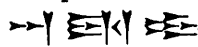 , Da.gan was the same as this god. If this be not his name, his name does not occur at all written phonetically ; and again, on the same sup position, Dagan, who is joined with Anu as a principal deity both at Ninarqd, as already mentioned, and in all the principal inscriptions at Khorsabad (BoTTA, 36. 8, &c.) would not be mentioned in either of the great invocations.
 - さて、ダゴンの名は明らかに魚を意味する単語Dagから派生しており、彼の像が魚と人間で構成されていたというのが常に支配的な見解であった。このことから、私は、Da.ganがこの神と同一であることをほとんど疑わない。もしこれが彼の名前でないならば、彼の名前は音声的に書かれた形では全く現れない;そして同じ仮定に基づけば、前述したようにニナルドでアヌとともに主要な神として結び付けられているダガンは、ホルサバードのすべての主要な碑文(ボッタ、36.8など)においても、いずれの大きな呼びかけにも言及されないことになる。
原文
16. On the Obelisk, a different title of the god now before us is substituted for the two on the frame, which I have translated " lord of kings, the running fish ;" and it is a little remarkable that on the Frame this title is given to Anu, instead of to him. This shows a connexion between this god and Anu ; and of course it favours the opinion that he is the same as Dagan. The title is mubis, followed by a plural noun, 𒉆𒁹𒌍, of which the reading and interpretation are doubtful. It occurs again at the close of the invocations on the Obelisk and Frame. I will not attempt an explanation of it. It appears to me, however, that Anu was considered a sea-god, as well as Dagan ; and that they were probably the Oannes and Xisuthrus of Chaldee mythology. See the extract from Berosus in the Chronography of Georgius Syncellus. The probable connexion between Oannes and An, an Egyptian word for " fish," has often occurred to me, as it, no doubt, has to other inquirers. [Colonel RAWLINSON, in the passage cited in the last note, gives a name of this god, which he says is used on the Octagon of Tiglath-pileser I., and which he thinks may be read Sisirats c Xisuihnes. The latter part, however, of this supposed word is an adjective; and the former part can scarcely be read Sisi. He also connects אפס| with the ποσ of Ποσειδῶν; and thinks that the ideographic compound in §13 should be read Nuha. In all this I am unable to agree with him, though I do so fully as to the connexion between this deity and the Biblical Noah.]- オベリスクでは、私たちが現在考察している神の異なる称号が、台座にある「王たちの主、走る魚」と私が訳した二つの称号に代わって用いられている。そして台座においてこの称号が彼ではなくアヌに与えられていることは少し注目に値する。これはこの神とアヌとの関連性を示しており、もちろん彼がダガンと同一であるという見解を支持するものである。その称号はmubisであり、続いて複数名詞である𒉆𒁹𒌍が続くが、その読み方と解釈は疑わしい。これはオベリスクと台座の呼びかけの最後にも再び現れる。私はこれの説明を試みない。しかしながら、アヌはダガンと同様に海の神と考えられていたように思われ、彼らはおそらくカルデア神話のオアンネスとクシストルスであった。ゲオルギウス・シュンケロスの『年代記』におけるベロススからの抜粋を参照[5]。オアンネスと「魚」を意味するエジプト語のAnとの間の可能性のある関連性は、私だけでなく他の研究者にもしばしば思い浮かんでいることであろう。
[ローリンソン大佐は、前注で引用した箇所において、この神の名前を挙げており、彼はそれがティグラト・ピレセル1世の八角柱碑文で用いられていると述べており、Sisirus = Xisuthnesと読めるかもしれないと考えている。しかしながら、この想定される語の後半部分は形容詞であり、前半部分はおそらくSisiと読むことはできない。また彼はאפסをΠοσειδῶνのποσと結び付け、この§13の表意複合体はNuhaと読むべきだと考えている。私はこれらすべてに同意できないが、この神と聖書のノアとの関連性については完全に同意する。]
原文
17. The god with the next highest number in K. 170, is 𒀭𒌍, =*Tsin*=, whose name is the first element in the name of Sennacherib. It is otherwise written , an ideographic compound signifying " the lord of ---?" The number assigned to this god was xxx. ; and it is remarkable that the most usual expression for his name consisted of the character for god, and this number. The same thing happens in the case of the goddess xv. ; but I have met with no other number similarly used. The character for xxx. had the value
  , =*tsi. in*=, not only in this proper name, but in that of the city of =*Partsindu*=, which is written with it, and with the two characters just mentioned in its stead, in different copies of the historical inscription from the north-west palace at Nimrad. The usual value of 𒌍 is, however, is, as in the numeral adverb, as I take it to be, " tenthly,"
  , =*is. ri. ti*=; the initial character in which seems to have been distinguished from the second character in 𒊩𒅖𒋾 =*sal . ish . ti*=, " thirdly ;" though it would not be easy to say in what the distinction consisted.†
 † The distinction which Hebrew grammarians make between שׂ and שׁ, namely, that one expresses s, the other sh, is certainly not maintainable in this instance, nor ever, I think, in Assyrian. I incline to think, however, that 𒌍 denoted is, as in the English verb ; while 𒅖 was iss or ish. The former seems to have been connected with ,  and 𒋗 ; and the latter with 𒃻, 𒅆, and 𒋙. The former sound was preferred by the Babylonians, and the caracters expressing it were used by them when the others would have been more proper. I beleive, howerver, that it was correct to write In,
  za, for the relative and the relative and the proposition "of," answering Ethiopic za and the Chaldee ר ; and to use characters of the other series where the affixes of the third person and the preformative of the causative conjugation had to be expressed, which become ח in the Semitic languages heretofore known. The distinction between s and sh I believe to have been, that the former was used when not in contact with i, and the latter when in contact with it. I may as well observe here, that I now write s, ch, and j, for the Assyrian equivalents of ד, צ, and ט. I have no doubt at all as to these having been their values.
- K.170における次に高い数字を持つ神は𒀭𒌍Tsinであり、その名はセンナケリブの名前の最初の要素である。別の形態ではと書かれ、これは「---の主」を意味する表意複合体である。この神に割り当てられた数字は30であった;そして彼の名前の最も一般的な表現が神を表す文字とこの数字で構成されていたことは注目に値する。同じことが女神15の場合にも起こる;しかし私は同様に用いられた他の数字には出会っていない。30を表す文字は、この固有名詞だけでなく、Partsinduという都市の名前にも用いられており、これはニムラドの北西宮殿からの歴史的碑文の異なる写本でそれに代わる二つの文字とともに書かれている。しかしながら、𒌍の通常の価値は、私が考えるに数詞副詞における「第十に」、、is. ri. tiである;その最初の文字は𒊩𒅖𒋾sal . ish . ti、「第三に」における二文字目と区別されていたように思われる;ただしその区別が何に基づいていたかを言うことは容易ではない[7]。
ヘブライ語文法学者がשׂ とשׁとの間に設ける区別、すなわち一方がsを、他方がshを表すという区別は、この場合には確かに維持できないし、私が考えるにアッシリア語でもそうであったことはないと思う。しかしながら、私は𒌍が英語動詞におけるisのようにisを表し、𒅖がissまたはishを表していたと考えたい。前者は
、および𒋗と関連していたように思われ、後者は𒃻、𒅆、および𒋙と関連していたように思われる。前者の音はバビロニア人に好まれ、彼らは他の文字がより適切であった場合でもそれを用いたと思われる。しかしながら、私は、関係詞および「の」を意味する前置詞に対してエチオピア語のzaおよびカルデア語のרに対応する関係詞および前置詞のために、zaと書くことが正しかったと信じており、これまで知られているセム語におけるחのように三人称の接辞および使役活用の前置詞を表現する必要がある場合には他の系列の文字を用いることが正しかったと信じている。sとshとの区別は、前者がiと接していない場合に用いられ、後者がiと接している場合に用いられたというものであったはずである。ここで私は、アッシリア語に対応するד、צ、およびטに対してそれぞれs、ch、およびjを書くことを今述べておく。これらがそれぞれの音価であったことについて私は全く疑いを持っていない。
原文
18. The name of Tsin follows that of the preceding god, both on the Frame and on the Obelisk. He has the epithet irsu, and the titles =*bil agin, saqu (?) navriri*=, all of which are obscure to me. Sargon placed him after the preceding god, as the second of seven to whom he assigned chapels at Khorsabad; but he did not dedicate a gate to him, nor mention any reason for gratitude to him. Nebuchadnezzar built two temples for him, calling him in one place =*mudavviq idatiya*=," the strengthener of my hands." His title in the other place (iv. 61, 62), I cannot read or translat, beyond the last word, =*daviqtiya*=, " of my strength." I cannot identify this god with any of those of any other mythology with any confidence. I conjecture that he was the Set of the Egyptians ; and I am at present rather disposed to connect the planet Jupiter with him than with Bin.- Tsinの名は台座とオベリスクの両方で前の神の後に続く。彼はirsuという形容詞と、bil agin, saqu (?) navririという称号を持っているが、これらはいずれも私には不明瞭である。サルゴンはホルサバードで彼に礼拝堂を割り当てた七人のうちの二番目として彼を前の神の後に配置した;しかし彼は彼に門を捧げず、彼に対する感謝の理由を述べなかった。ネブカドネザルは彼のために二つの神殿を建て、一箇所で彼をmudavviq idatiya、「私の手を強める者」と呼んだ。もう一箇所(iv. 61、62)における彼の称号は、最後の単語daviqtiya、「私の力の」の部分以外は読むことも翻訳することもできない。この神を他の神話のいかなる神とも確信を持って同一視することはできない。私は彼がエジプト人のセトであったと推測している;そして私は現在、惑星木星をビンではなく彼と結び付ける傾向がある。
原文
19. The four preceding gods stand in the same order on the Obelisk and in K. 170; their numbers in the latter being also in the same order. I think that there is no good ground for doubting that these were the four principal gods of the Assyrians, after Assur, and that they were considered to stand in this order. They probably presided over the equinoctial and solstitial signs of the zodiac; and over the days of new and full moon, and of the quadratures. It is, however, uncertain which of them was connected with each of them, save that Bil was named with the last quarter of the month. Of the remaining eight deities the order is uncertain. I will take them in the order in which they stand on the Obelisk.- 前述の四つの神はオベリスクとK.170の両方で同じ順序に位置しており、後者における彼らの数字も同じ順序である。私は、これらがアッシリア人の主要な四つの神であり、アッスルに次ぐものであり、彼らがこの順序で位置していると考えられていたことを疑う良い根拠はないと思う。彼らはおそらく黄道帯の春分点および夏至点を司っており、新月と満月、および二至二分の日々を司っていた。しかしながら、彼らのうちどれがそれぞれと結び付けられていたかは不確かであり、ビルが月の最後の四分の一とともに名付けられていたことを除いては不明である。残りの八つの神々の順序は不確かである。私はオベリスクにおける彼らの順序でそれらを取り上げることにする。
原文
[I was surprised to see, in p. 6 of Colonel Rawlinson’s “Notes,” that he reads 𒌍 𒊏 𒀀, which he gives from an Assyrian vocabulary as the word for “twenty,” sinra, in place of is. ra. a. The repeated vowel here denotes plurality, as in the instance given in the note in p. 15, and it was probably to be read with an added nasal, isrâ, or, if I be right in the above conjecture, izrâ. The word for “thirty,” I may add, in the same vocabulary, is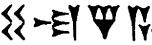 , sa. la. sa. a; which shows that
  is not exclusively connected with the sound s, as I supposed above. The distinction between it and 𒅆 lay in the vowels. The identity of the terminations of the words for “twenty” and for “thirty,” the former of which (“two tens”) would be in the dual number, if such existed—while the latter could not possibly be so—proves that the Assyrian language did not possess a distinct dual. I could never discover one; but Colonel Rawlinson thought that he did. It appears to me that this question may now be considered as decided.]
 [ローリンソン大佐の『覚書』の6頁で、彼がアッシリア語の語彙から「二十」を意味する単語として与えている𒌍 𒊏 𒀀、sinraを、私が上記で述べたようにis. ra. aの代わりに読むのを見て驚いた。ここで繰り返される母音は『覚書』15頁の注に示された例のように複数形を示しており、おそらく鼻音が付加されてisrâ、あるいは私が上記の推測で正しいならばizrâと読まれたのであろう。「三十」を意味する単語は同じ語彙で、sa. la. sa. aであり、これによりが私が上で想定したように音sと排他的に結び付けられていないことが示される。これと𒅆との区別は母音にあった。「二十」(「二つの十」)の単語の語尾と「三十」の単語の語尾が同一であることは、前者がもし存在したならば双数形であり得る一方で後者は決してそうではあり得ないことから、アッシリア語には明確な双数形が存在しなかったことを証明している。私はそれを発見することはできなかった;しかしローリンソン大佐は彼がそれを発見したと考えた。この問題は現在決着がついたと考えられるように思われる。]
原文
20. The first of the minor deities here named was 𒀭𒅎, which I read =*Bin*=, because it begins the name of the predecessor of Hazael on the throne of Syria, which is written בן־הדד in the second Book of Kings. It is also used to express the second element in the name of Nabopolassar in the inscriptions from Lower Babylonia. This is written =*bal*=, “a son,” in the inscriptions found at Babylon itself; but as we know that the form bin was used in other Semitic languages, we can well suppose that it was so in this province. This is surely more likely than that =*bal*= should have a third character to express it, while bin had none; and that the first syllable of the name of the Syriac king should have been totally changed in the Hebrew Scriptures.*- [The name to which I refer is 𒀭𒀝𒅎𒌇, the last character of which is a variant of
 , which is, I can scarcely doubt, the equivalent of
  ., the ordinary monogram for yuchur,
  . I took it for granted that Colonel RAWLINSON admitted this to the name of Nabopolassar ; and that we only differed as to whether the middle character should be read pal or bin. I find, however, from the report of a recent meeting of the Royal Asiatic Society, that Colonel RAWLINSON supposes the above name to be that of Nabunahid, whom he calls Nabuunit; and that, apparently in ignorance that the ordinary monogram for the concluding element of the name 𒄿 is transcribed by 𒈾 𒀪 𒀉, na. ah. id, he considers its two last characters to be the phonetic equivalent of this monogram; reading them in. (for im) duk. I cannot doubt that he is here altogether mistaken.]
- ここで名前が挙げられている下位の神々の最初のものは𒀭𒅎であり、私はこれをBinと読んでいる。なぜならそれはシリアの王座におけるハザエルの前任者の名前の最初にあり、列王記第二にבן־הדדと書かれているからである。またこれは下バビロニアからの碑文においてナボポラッサルの名前の第二要素を表すためにも用いられている。これはバビロン自体で発見された碑文ではbal、「息子」と書かれている;しかし他のセム語でbinの形態が用いられていたことを私たちは知っているので、私たちはこの州でもそうであったと十分に考えることができる。これはbalがそれを表すために三つ目の文字を持ち、binが何も持たないよりも確かにもっとありそうなことであり、シリア王の名前の最初の音節がヘブライ語聖書で完全に変えられたことよりも確かにもっとありそうなことである。[7]
[私が言及している名前は𒀭𒀝𒅎𒌇であり、その最後の文字は
の変形であり、これは私はほとんど疑うことなく、すなわちyuchur、に相当するものであると考えている。私はローリンソン大佐がナボポラッサルの名前にこれを認めていると当然のことと思っており、私たちは中間の文字をpalと読むべきかbinと読むべきかについてのみ意見が異なっていると思っていた。しかしながら、最近の王立アジア協会の会合の報告から、ローリンソン大佐は上記の名前をナブナヒドのものであると考えており、彼はそれをナブウニットと呼んでいることがわかった。そして、おそらく𒄿という名前の結末要素の通常のモノグラムが𒈾 𒀪 𒀉na. ah. idによって転写されることを知らずに、その二つの最後の文字をこのモノグラムの音声的同等物であると考えており、それらをin(imの代わりに)dukと読んでいる。ここにおいて彼が完全に誤っていることは疑うべくもない。]
原文
21. This god was, as I have already mentioned, the son of Anu ; and a temple was dedicated to these two gods by a prince named Samsi-Bin, about 1800 years B. c., as appears from the inscription on the Octagon in the British Museum, as interpreted by me last year. He stands in the sixth place on the Frame as well as on the Obelisk, but is preceded on the former by Marduk. His titles are different, and I cannot venture to translate them as they stand on either document. Sargon dedicates a gate to him as =*mukin*= . . . =*liya*=. The be ginning of the latter word consists of two characters, which, as usually valued, would be =*kan-ik*= ; but I consider it as certain that this combination was to be read in a different manner, which can only be learned from some tablet. I am ignorant of the meaning of this word which occurs also in the titles on the Obelisk. Bin is the fifth of the seven gods who had chapels (?) at Rhorsabad. In K. 170 he has the sixth place ; but his number is only vi.- この神は、私がすでに述べたように、アヌの息子であり、紀元前1800年頃にサムシ・ビンという名の王子によってこれら二つの神に神殿が捧げられたことが、私が昨年解釈した大英博物館の八角柱碑文から明らかである。彼はオベリスクだけでなく台座でも六番目の位置に立っているが、前者ではマルドゥクに先行されている。彼の称号は異なっており、私はどちらの文書においてもそれらをそのまま翻訳することはできない。サルゴンは彼にmukin . . . liyaとして門を捧げている。後者の単語の最初は二つの文字で構成されており、通常の音価ではkan-ikとなる;しかし私はこの組み合わせが異なる方法で読まれるべきであることが確実であると考えており、その方法は何らかの粘土板からのみ学ぶことができる。私はオベリスクの称号にも現れるこの単語の意味を知らない。ビンはホルサバードで礼拝堂(?)を持っていた七人の神々のうちの五番目である。K.170では彼は六番目の位置にある;しかし彼の数字はわずかに6である。
原文
22. The only variety in writing his name with which I am acquainted is 𒌋, which might have given rise to the opinion that his number would be x. Though the name is to be read Bin, and in composition may thus stand for " son," it is certain that this was not its value as an ideograph. It is used in connexion with the points of the compass, and its power of sweeping things away is frequently alluded to : whence there can be no doubt that it denotes " wind." The Assyrian b was often sounded as our v ; and I am disposed to connect the name with the Latin ven-tus and its cognate words ; not meaning, however, to affirm that the Assyrian word for " wind" was bin, or any thing similar. What that was, may perhaps be discovered from some of those terracotta tablets, the want of free access to which is so deeply to be regretted. As this character was used for im and iw, or yu, it was natural to connect this god, as I did formerly, with Jupiter ; and he may be identified with him even now, as the god of the air, but by no means as the chief of the gods. I think it less likely that he was connected with the planet Jupiter than that Tsin was so ; but on this point there is an absence of evidence.- 私が知っている彼の名前の書き方の唯一の変形は𒌋であり、これは彼の数字が10であるという見解を生じさせたかもしれない。名前はBinと読まれ、構成において「息子」を表すことができるが、これは表意文字としてのその価値ではなかったことは確かである。これは方位と関連して用いられており、その掃き清める力が頻繁に言及されている;したがってこれが「風」を表すことに疑いの余地はない。アッシリア語のbはしばしば私たちのvとして発音された;そして私はこの名前をラテン語のven-tusおよびその同根語と結び付けたいと考えている;しかしながら、アッシリア語で「風」を意味する単語がbinまたはそれに類似するものであったと断言するつもりはない。それが何であったかは、おそらくあのテラコッタ製の粘土板のいくつかから発見されるかもしれないが、それらへの自由なアクセスがないことは非常に遺憾である。この文字がimおよびiw、またはyuのために用いられたため、私が以前にそうしたように、この神を木星と結び付けることは自然であった;そして彼は空気の神として今でも彼と同一視され得るが、決して神々の主としてではない。私は彼が惑星木星と結び付けられていた可能性よりもTsinがそうであった可能性の方が低いと思う;しかしこの点については証拠が欠如している。
原文
23. The next god on the Obelisk, the seventh, 𒀭 𒃻 𒈦, =*sa. mas*=, for which we have occasionally the monogram 𒀭𒌓. This was certainly the Sun-god; and when the god was intended, I think that this crude, or construct form of the noun was always used ; as indeed seems to have been the case with all the divine names except =*Anu*=. When, however, the material Sun is intended, we have in the nominative 𒀭 𒌑 𒋗, =*sam. su*=, and in the genitive 𒀭 𒌑 𒅆, or 𒀭 𒌓 𒅆, =* sam. si*=- オベリスクにおける次の神、七番目の𒀭 𒃻 𒈦sa. masは、時折モノグラム𒀭𒌓で表されることがある。明らかに太陽神であり、神の名としては、私はこのような素の形態、または名詞の構成形が常に用いられたと考えている;実際、Anuを除くすべての神聖な名前においてそうであったように思われる。一方、物質的な太陽を表すときには、主格で𒀭 𒌑 𒋗、sam. su、属格では𒀭 𒌑 𒅆または𒀭 𒌓 𒅆、sam. siとなる。
原文
24. The Sun-god is usually characterized as " the (great) 𒁲𒋻 of heaven and earth." The most probable reading of the two characters here given, which must form a construct noun, is =*di-kut*=, or =*qut*=, but I must confess my inability to explain it ; and the values of the two syllables are both uncertain. To this title is sometimes added =*mumahir gimri*=, which may mean " the rouser up of everything."- 太陽神はしばしば「天と地の(偉大な)𒁲𒋻」と称えられる。ここで与えられた二つの文字の最も可能性の高い読み方は構成名詞を形成するものであり、di-kutまたはqutであるが、私はそれを説明できないことを告白しなければならない;そして二つの音節の音価はいずれも不確かである。この称号には時折mumahir gimriが付け加えられ、これは「すべてを目覚めさせる者」を意味するかもしれない。
原文
25. The Sun occupies the twelfth place on the Frame, and the fifth in K.170. His number is there given as xx. Sargon dedicated to him a gate as musaksid irustiya," the depressor (?) of my ----- (?)." I do not recollect to have met with this noun elsewhere, and cannot explain it ; the verb, too, may rather mean " the maker to acquire." The Sun was also the fourth of the seven gods who are mentioned as having chapels (?) in the Khorsabad palace.- 太陽神は台座では十二番目の位置にあり、K.170では五番目の位置にある。彼の数字はそこでは20と与えられている。サルゴンは彼に対してmusaksid irustiya、「私の-----(?)の抑圧者(?)」として門を捧げた。この名詞に他で出会ったことはなく、それを説明することはできない;動詞もむしろ「獲得させる者」を意味するかもしれない。太陽神はまた、ホルサバード宮殿で礼拝堂(?)を持っていた七人の神々のうちの四番目でもあった。
原文
26. Next to the Sun on the Obelisk is a blank, occasioned by a fracture of the stone. A comparison with the Frame inscription proves that the name was , a monogram or ideographic compound,which is elsewhere transcribed by 𒀭 𒈥 𒂁, =*Mar. duk*=. On the Frame he has the fifth place. In K. 170 he has the seventh. His number is defaced: I conjecture that it was xxv. He had neither gate nor chapel at Khorsabad ; but in the principal inscriptions there he was classed with =*Amur*= and =*Nabiu*= ; these being the three gods to whom Sargon ascribes his victories. I have already mentioned that at Babylon he was considered the supreme god. Other monograms expressing his name were 𒀭𒋙 and 𒀭𒋃. I acknowledge myself unable to explain the usual titles of Marduk in Assyria, nor can I identify him satisfactorily with any other god.
 - オベリスクの太陽神の次の箇所は、石の破損により失われている。台座の碑文と比較すると、その名前はであり、これは他の場所では𒀭 𒈥 𒂁、Mar. dukによって転写されるモノグラムまたは表意複合体であったことが証明される。台座では彼は五番目の位置にある。K.170では彼は七番目の位置にある。彼の数字は損傷している;私はそれが25であったと推測する。彼はホルサバードで門も礼拝堂も持っていなかった;しかしそこにある主要な碑文では、AmurおよびNabiuとともに分類されていた;これらはサルゴンが彼の勝利を帰する三つの神々であった。私はすでにバビロンでは彼が最高神と考えられていたことを述べた。彼の名前を表す他のモノグラムには𒀭𒋙および𒀭𒋃があった。私はアッシリアにおけるマルドゥクの通常の称号を説明できないことを認めざるを得ないし、彼を他のいかなる神とも満足に同一視することもできない。
原文
27. The next deity on the Obelisk is 𒀭 𒈦, also written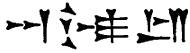 ; compare the different copies of the Standard inscription of the north-west palace at Nimrûd, near the beginning of which this name occurs. This was the god of war; and I have little doubt that his name was Bar; this being the ordinary Phonetic value of 𒈦, and having the same Indo-European affinities with =*bellum*=, =*war*=, &c., as =*Bin*= had with =*ventus*=, =*wind*=, &c. He stands in the seventh place on the Frame, and in the ninth in K. 170, where he is called son of “the god fifty,” that is, of =*Bil*=. He is the last of the series of seven gods at Khorsabad. Some of the most important monuments from the new palace at Nimrûd have been brought from a temple that was dedicated to him; and the inscriptions on them are filled with his praises. He is also represented in the sculptures. I believe him to have been connected with the planet Mars, as well as to have held a similar place in the Assyrian mythology to what Ares held in the Greek. The number connected with his name in K. 170 is unfortunately not legible.
 - オベリスクの次の神は𒀭 𒈦であり、とも書かれる;この名前が現れるニムルド近くの北西宮殿の標準碑文の異なる写本と比較せよ。これは戦争の神であり、彼の名前はBarであったことに私はほとんど疑いを持っていない;これは𒈦の通常の音声的価値であり、bellum、warなどと同じインド・ヨーロッパ語族の類似性を持っているからであり、Binがventus、windなどと持っていた類似性と同じである。彼は台座では七番目の位置にあり、K.170では九番目の位置にあり、そこで彼は「神五十」の息子、すなわちBilの息子と呼ばれている。彼はホルサバードでの七人の神々の列の最後である。ニムラドの新宮殿からの最も重要な記念碑のいくつかは彼に捧げられた神殿からもたらされており、それらに刻まれた碑文は彼の賛美で満たされている。彼はまた彫刻にも表されている。私は彼が惑星火星と結び付けられていたと信じており、アレスがギリシャ神話で占めていたような類似した位置をアッシリア神話でも占めていたと信じている。K.170における彼の名前に結び付けられた数字は残念ながら判読できない。
原文
28. The titles of this god are numerous, and not easy to be explained. That on the Frame I render, though with some doubt, “the bravest of the brave gods, the slayer of the bad.” That on the Obelisk is different, and is partly destroyed. It deserves particular notice that the name of this god is also used to denote “iron;” and I cannot help thinking that the =*Bar-jel*= (ברזל) of the Hebrews was a compound containing this name.- この神の称号は多数あり、説明するのは容易ではない。台座にあるものは、多少の疑いを持ちながらも、「勇敢な神々の中で最も勇敢な者、悪しき者の殺し手」と訳す。オベリスクにあるものは異なり、一部が破壊されている。この神の名前が「鉄」を表すためにも用いられていることは特に注目に値する;そして私はヘブライ語のBar-jel(ברזל)がこの名前を含む複合語であったと考えざるを得ない。
原文
29. Although Bar was the principal war-god of the Assyrians, he was not the only one. His name is followed on the Obelisk by a monogram denoting a god whose titles I would translate, “the blood-stained, the king of the battle-field.” His titles on the Frame are the same; and in both he occupies the same place—the tenth. This monogram is 𒀭𒌋𒄥. It appears to me evident that this is the same god who is called in the great inscriptions from the north-west palace, containing the annals of Assuryuchurabal. (Reverse, l. 141, et passim.) These characters would denote, as an ideograph, “the great brother-god.” In K. 170, the first of these forms occurs joined to the number XII; and to the name is added 𒀭𒄊, which would naturally be read =*Nir*=. Joining this to the fact that 𒃲 had the value =*gal*=, as well as =*rab*=,* I am disposed to think that
  might be read =*nir*= as well as =*akh*=; and that the second form of the name should be read =*Nir-gal*=.† * In the nominative masculine gallu and rabu, showing that the first root is גלל = Heb. גדל. The change of d into =*l*= is not unfrequent in Greek; and in Latin it is very common.
 † In the copy of K. 170 that I took, I find no trace of any character after nir. It is possible, however, that I may have overlooked that which I have read gal.
- バルはアッシリア人の主要な戦争の神であったが、唯一の神ではなかった。オベリスクでは彼の名前に続いて、私が「血に染まった者、戦場の王」と訳したい神を表すモノグラムがある。台座における彼の称号も同じであり、両方で彼は同じ位置、すなわち十番目に位置している。このモノグラムは𒀭𒌋𒄥である。これはアッスルユクルアバルの年代記を含む北西宮殿からの大きな碑文でと呼ばれている同じ神であることは明らかであるように思われる。(裏面、行141、および随所)これらの文字は表意文字として「偉大な兄弟神」を表すであろう。K.170では、これらの形態の最初のものが数字XIIに結び付けられて現れる;そして名前には𒀭𒄊が付け加えられており、これは自然にNirと読まれるであろう。これを𒃲がgalだけでなくrab[8]の価値を持っていたという事実と結び付けると、私はがakhだけでなくnirとも読まれるかもしれないと考えており、名前の第二の形態はNir-galと読むべきであると考えている。[9]
主格男性形であるgalluおよびrabuは、最初の語根がヘブライ語のגדלに相当するגללであることを示している。ギリシャ語ではdがlに変化することは珍しくなく、ラテン語では非常に一般的である。
私が取ったK.170の写本では、nirの後にいかなる文字の痕跡も見つからない。しかしながら、私がgalと読んだものを見落とした可能性はある。
原文
30. Whether I am right or not in this reading, depends on whether the first of the above names is that which begins a royal name, that M. OPPERT found at Babylon, the remainder of which is sar-yuchur. M. OPPERT identified this name with the Neriglesar, or Niricassolassar of Ptolemy's canon, and with the Nirgal-sharezar of Jeremiah, xxxix. 3. The propriety of this identification seems unquestionable. M. OPPERT has not stated what monogram for a divine name he found at the commencement of the royal name ; but he says that it was one of those on the Nimrild Obelisk ; and it could scarcely have been any other of them than that which I am now considering.- この読み方が正しいかどうかは、上記の名前の最初のものがバビロンでオッペルト氏が発見した王名を始めるものであり、その残りがsar-yuchurであるかどうかに依存する。オッペルト氏はこの名前をプトレマイオスの年代記におけるネリグレサル、またはニリカッソラッサル、およびエレミヤ書39章3節におけるニルガル・シャレザルと同一視した。この同一視の妥当性は疑いようがないように思われる。オッペルト氏は王名の冒頭で彼が発見した神聖な名前のモノグラムについて述べていない;しかし彼はそれがニムルドのオベリスクにあるものの一つであったと言っており、私が現在考えているもの以外のものであった可能性はほとんどないであろう。
原文
31. The eleventh name on the Obelisk is 𒀭𒀝; which is repeatedly transcribed in the Babylonian inscriptions by , =*na.bi.u*= (or =*uv*=). Another equivalent monogram is 𒀭𒉺 (compare B. M. 85, l. 1, 12). He has nearly the same titles on the Obelisk and on the Frame; they begin “the assistant (?) who bears the excellent sceptre;” and the sceptre is also mentioned in connexion with him by Nebuchadnezzar, both in I. 43, &c., and in IV. 18, &c. I think I can scarcely be mistaken in supposing the monogram
  to denote a sceptre; because on the statue in the British Museum, where the king holds a sceptre in his hand, he speaks of his sitting on the throne of his kingdom, and fitting to his hand this object, whatever it was. (Frame inscription, lines 60, 64.) The initial character is the ideograph for “wood,” being phonetically =*ich*=, עץ.* In K. 170, if Nebo be mentioned at all, it is in connexion with the number x. At the end of this line is
  , which may be read “Nebo, the assistant” (?). The last character is that which occurs after the name of Nebo on the Frame and on the Obelisk. It seems to denote ideographically the root חבל, “to assist” (?) in all its forms. I must observe, however, as throwing some doubt on this identification of Nebo with the god x. of K. 170, that between the number and the supposed name of Nebo, there is the name 𒀭𒉈𒉺𒄭, both the last characters of which are used ideographically for “fire, flame.” Now, it has been the custom to identify Nebo with the planet and god Mercury; and I know no reason, apart from this Tablet, for connecting him with fire. I cannot, therefore, feel much confidence as to his being the deity intended on the Tablet.
 * M. OPPERT has announced, as an important discovery, that this character denoted that what follows was to be taken ideographically, and not phonetically. In this he is altogether mistaken. Other alleged discoveries of M.OPPERT have been long since published in this country.
- オベリスクの十一番目の名前は𒀭𒀝であり、これはバビロニアの碑文で繰り返しna.bi.u(またはuv)と転写されている。もう一つの同等のモノグラムは𒀭𒉺である(B.M.85、行1、12を参照)。彼はオベリスクと台座でほぼ同じ称号を持っており、それらは「優れた笏を携える助け手(?)」で始まる;そして笏はネブカドネザルによっても彼と関連して言及されており、I.43などおよびIV.18などにおいても言及されている。私は王が手に笏を持っている大英博物館の像において、彼が彼の王国の王座に座り、この物体を彼の手に合わせることについて語っているので、モノグラムが笏を表すと考えることにほとんど間違いがないと思う。(台座の碑文、行60、64)最初の文字は「木」を表す表意文字であり、音声的にはich、עץ [10]である。K.170では、ネボが言及されている場合、それは数字10と関連している。この行の最後にはがあり、これは「助け手ネボ」(?)と読まれるかもしれない。最後の文字は台座とオベリスクでネボの名前の後に現れるものである。これは表意的に根本的にחבל、「助ける」(?)をそのすべての形態で表すように思われる。しかしながら、K.170の第十の神とネボとのこの同一視にいくらか疑問を呈せざるを得ない点として、数字と想定されるネボの名の間に、𒀭𒉈𒉺𒄭という名がある。この名の末尾二文字は、いずれも「火、炎」を表す場合に用いられている。従来、ネボは惑星水星・マーキュリー神と同一視されてきた。本碑文以外で彼を火と結びつける根拠は知られていない。ゆえに、彼が本碑文で意図された神であるという確信は持てない。
オッペルト氏は、この文字が後に続くものは音声的ではなく表意的に取られるべきであることを示す重要な発見として発表した。彼は完全に誤っている。オッペルト氏の他の主張された発見は、この国でずっと前に公表されている。
原文
32. The two remaining names on the Obelisk and Frame are those of goddesses. The first named of these is 𒀭𒊩𒈠𒆤, which name is interchanged with (compare B. M. 86. l. 12). The second character in the former name signifies ideographically “lady,” or “mistress.” It is the feminine of 𒂗 “lord.” We have, in fact, “my lady,” or “my mistress,” expressed by this character with the affix ya in the inscription on the lion in the British Museum, line 7; as it is by
  (B. M. 86. 13), by
  in Reverse l. 345, and by =*bi-il-ti*= (Gr. 1. 32). Now, as the name which was certainly pronounced =*Bil*= differs from this only in having the character for “lord” in lieu of that of “lady” (see § 11), it is natural to suppose that this was read =*Bilat*= or =*Biltu*=. If Beltis be the Assyrian name of a goddess, as has been asserted, it is evident that this must be she.
 - オベリスクと台座における残りの二つの名前は女神のものである。これらのうち最初に挙げられるのは𒀭𒊩𒈠𒆤であり、この名前はと交換可能である(B.M.86、行12を参照)。前者の名前の第二の文字は表意的に「女主人」または「女主」を意味する。これは𒂗「主」の女性形である。実際、大英博物館のライオン像の碑文、行7では、この文字に接尾辞yaを付けて「私の女主人」または「私の女主」を表している;同様に(B.M.86、行13)、裏面行345の、およびbi-il-ti(Gr.1.32)によっても表されている。さて、確かにBilと発音された名前は、「女主人」の文字の代わりに「主人」の文字を持っている点でこれと異なるだけである(§11を参照);したがってこれはBilatまたはBiltuと読まれたと考えるのが自然である。ベルティスが女神のアッシリア名であるとすれば、これは彼女であることは明らかである。
原文
33. The titles of this goddess on both the Obelisk and the Frame can be explained with perfect confidence. She is " the wife of Bil, the mother of the great gods." In B. M. 86. 1, she is called , " mistress of the mountains," a title similar to what is given to Anu on the Obelisk. Sargon dedicated to her a gate as =*mudisat khijbiya*=, of which I cannot conjecture the meaning, though the construction is obvious : " the ---tress of my ---." She is not mentioned under either of the preceding names in the inscriptions of Nebuchadnezzar. I formerly conjectured that she was the =*Gula*= of these in scriptions, she being a different goddess from Ishtar; and I have met with nothing inconsistent with this conjecture. At any rate, if the heavenly bodies have representatives in this series of deities, she must be, as I have formerly stated, the planet Venus ; for Ishtar with her horns is unquestionably the Moon.
 - オベリスクと台座の両方におけるこの女神の称号は完全な自信を持って説明できる。彼女は「ビルの妻、偉大な神々の母」である。B.M.86、行1では、「山々の女主人」と呼ばれており、これはオベリスクでアヌに与えられたものと類似した称号である。サルゴンは彼女に対してmudisat khijbiyaとして門を捧げたが、その意味を推測することはできないが、構成は明白である:「私の---の---者」。彼女はネブカドネザルの碑文では前述のいずれの名前でも言及されていない。私は以前、彼女がこれらの碑文におけるGulaであり、イシュタルとは異なる女神であると推測した;そして私はこの推測と矛盾するものには出会っていない。いずれにせよ、もし天体がこの一連の神々に代表されているならば、彼女は私が以前に述べたように金星でなければならない;なぜなら角を持つイシュタルは疑いなく月だからである。
原文
34. There is, however, a second name of a goddess in inscriptions of Nebuchadnezzar; though not, I believe, in the same inscriptions where Gula is mentioned, which, I think, must belong to the goddess now before us. That name is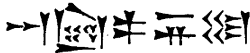 , =*Jar.pa.ni.tu*=, as it is written in Grotefend’s cylinder of Nebuchadnezzar, and also in the inscriptions of Sargon. On a slab of Tiglath-pileser II. it is written
 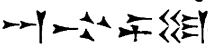 , that is, Jir.bani.tu. Though these forms are not identical, there is so much resemblance between them that I cannot consider them essentially different, especially as both the names occur in similar contexts. In the Babylonian inscriptions this goddess is mentioned in connexion with Marduk; but in the Assyrian inscriptions always with Bil; and she thus takes the place of the goddess named first on the Obelisk, with whom I here identify her. As to the derivation of the name, the termination itu is obviously that of the nominative feminine. Adjectives ending in an signify “full of.” The root, then, is Jarp, or Jirb; and the divine name is a feminine adjective, related to this as formosa to forma. I cannot help thinking that the divine name in Gr. 2, 48, Bil jar.bi, is the masculine form of Jarbanitu, being equivalent to Jarbanu, as the goddess’s name is to Bilat jarbi; nor should I be in the least surprised if some Assyrian syllabary should equate 𒆤 to .*
 * [In Colonel Rawlinson’s recently published “Notes,” he has made a series of what appear to me most extraordinary mistakes respecting this name. In the first place, he considers it to be a title of Bil, instead of the name of the wife of Bil; but in Gr. 1. 32, Nebuchadnezzar says, “A house for Jarpanitu my mistress (biltiya) with silver I adorned.” Secondly, he divides this word, which is a regularly formed derivative from a triliteral root, as shown in the text, into two words, ziru banitu, which he supposes to signify “the seed of (something unknown),” ziru being זרע. Now, though  may signify “the seed of,” it would not be read with that signification ziru, which would be the nominative when not in construction; but zir, or, as I write it, jir. It is equated to , ji.ir (compare Botta, 63. 8, and 74 bis 4). Nor, again, could banitu be a noun in the genitive; nor, I may add, an adjective in the nominative agreeing with jiru, it being feminine, while that noun is masculine. This last hypothesis would, however, be inconsistent with Colonel Rawlinson’s further speculations. In the third place, having obtained this imaginary compound, ziru-banitu, he imagines the existence of a similar compound, ziru-ishtar, “the seed of Ishtar,” with which he identifies the name Zoroaster! In the fourth place, he supposes that the persons to whom these imaginary names belonged were mythic representatives of the Scythic and Semitic races; ziru banitu being, “of course, the Zerwan of later times, who was understood to be the same as Shem.”—Notes, p. 13. I will not follow him into his chronological speculations, further than to observe, that the supposed base on which he builds, “the domestic revolution at Nineveh in 747 B. C.,” when Tiglath-pileser II. succeeded Pul, is a non-existent one. The former king was on the throne long prior to 747 B. C., as is certain from 2 Kings, xv. 29, and from a tablet in the British Museum; and nothing extraordinary seems to have occurred in that year at Nineveh. What distinguished it at Babylon was simply that Nabonassar, on coming to the throne, was pleased to destroy the records of his predecessors.]
- しかしながら、ネブカドネザルの碑文には、女神の名がもう一つ存在する。もっとも、私の考えでは、グラが言及されているのと同じ碑文の中ではなく、その名は、ここで問題にしている女神に属するものでなければならないと思われる。その名は 、すなわち Jar.pa.ni.tu であり、これはグローテフェントが公表したネブカドネザルの円筒碑文に見られる表記であり、またサルゴンの碑文にも現れる。ティグラト・ピレセル二世の石板では と書かれており、すなわち Jir.bani.tu である。これらの形は同一ではないものの、両者のあいだには非常に大きな類似があるため、とりわけ両名が類似した文脈に現れることを考えると、本質的に異なるものとは考えられない。バビロニアの碑文ではこの女神はマルドゥクと関連づけて言及されるが、アッシリアの碑文では常にビルとともに現れる。したがって彼女は、オベリスクに最初に名を挙げられている女神の位置を占めることになり、私はここで両者を同一視する。 この名の語源について言えば、語尾の itu は明らかに女性主格を示すものである。an で終わる形容詞は「〜に満ちた」を意味する。したがって語根は Jarp あるいは Jirb であり、この神名は、forma に対する formosa の関係と同様に、これに関連する女性形容詞である。私は、Gr. 2, 48 に見える神名 Bil jar.bi が Jarbanitu の男性形であり、女神名が Bilat jarbi に対応するのと同様に、Jarbanu に相当するものであると考えずにはいられない。さらに、将来アッシリア語の音節表が 𒆤 を に等置するような例を示したとしても、私は少しも驚かないだろう。[11]
[ローリンソン大佐が最近公刊した『覚書』において、彼はこの名称に関して、私にはきわめて異常と思われる一連の誤りを犯している。第一に、彼はこれをビルの妻の名ではなく、ビルの称号であると考えている。しかし Gr. 1, 32 において、ネブカドネザルは「我が女主人ジャルパニトゥ(biltiya)のために、銀で飾った家を建てた」と述べている。第二に、本文で示したように、この語は三子音語根から規則的に派生した語であるにもかかわらず、彼はこれを二語、すなわち ziru banitu に分解し、「(何か未知のものの)種子」を意味すると想定している。ここで ziru は זרע であるという。ところが、
が「〜の種子」を意味しうるとしても、その場合の読みは、非連語形における主格形である ziru ではなく、zir、あるいは私の表記では jir でなければならない。それは 、ji.ir に等置される(Botta, 63.8 および 74 bis 4 参照)。さらに、banitu は属格の名詞であることもできず、また付け加えるなら、jiru に一致する主格形容詞であることもできない。なぜなら banitu は女性形であり、jiru は男性名詞だからである。しかし、この最後の仮説は、いずれにせよローリンソン大佐のその後の推測とは整合しない。第三に、彼はこの架空の複合語 ziru-banitu を得た後、さらに ziru-ishtar「イシュタルの種子」という類似の複合語の存在を想定し、これをゾロアスターの名と同一視している。第四に、彼はこれらの架空の名称を持つ人物たちがスキタイ系およびセム系人種の神話的代表者であったと想定し、ziru banitu は「言うまでもなく後代のゼルワーンであり、これはセムと同一視されていた」と述べている(Notes, p. 13)。私は彼の年代論的推測をこれ以上追うつもりはないが、彼が基礎としている「紀元前747年、ティグラト・ピレセル二世がプルの後を継いだ際に起きたニネヴェの内乱革命」という出来事が、実在しないものであることだけは指摘しておきたい。前王は紀元前747年よりはるか以前から王位にあったことが、『列王記下』15章29節および大英博物館所蔵の石板から確実であり、その年にニネヴェで何か異常な出来事が起きた形跡はない。バビロンで特筆すべきだったのは、即位にあたってナボナッサルが前王たちの記録を破棄したという点だけである。]
原文
35. The last name on the Obelisk is 𒀭𒈹, for which we have on the Frame a character difficult to represent by types, and which seems to me to be identical with that which occurs in the great inscription at the India House, at the end of l. 50. It is elsewhere written 𒀭𒅖𒋻, =*Ish.tar*=; and both the forms are not only names of a particular goddess, but denote “a goddess” generally. In the Assyrian inscriptions this goddess is generally named in connexion with Assur; in the Babylonian 𒀭 𒀀 𒀀, which I take to be the same name, is connected with the Sun. =*Ishtar*= is called on both the Obelisk and the Frame “the protectress (?) of heaven and earth from violence.” At Khorsabad she is called “the causer to rejoice (=*musammikhhat*=) of the men of the provinces (? ).”* On the Reverse inscription from the north-west palace at Nimrûd, l. 345, the king speaks of her as “Ishtar, the mistress of Nineveh, my mistress.”*The character 𒋙 is often used for the affix of the third person masculine singular; but it cannot be so here, there being nothing to which it can refer. It must, therefore, be the equivalent of  , as in the ordinary title of royalty, 𒌋𒌋𒋙, sar kissatin. I believe that the Persian title “king of the provinces” is the equivalent of this; and yet, as kissat, followed by the ideographic plural “of men,” is used for kissatin, the meaning may rather be, “of the tribes, or families.” Perhaps “mankind” would more correctly represent the original than “the provinces.” This remark applies also to the title of the goddess of § 36, in which the same character is used.
- オベリスクの最後の名前は𒀭𒈹である。台座には活字で表現するのが難しい文字があり、これは私にはインドハウスにある大きな碑文の行50の最後に現れるものと同一であるように思われる。別の場所では𒀭𒅖𒋻、すなわちIsh.tar と書かれている;そして両方の形態は特定の女神の名前であるだけでなく、一般に「女神」を表している。アッシリアの碑文ではこの女神は一般にアッスルと関連して名を挙げられる;バビロニアでは𒀭 𒀀 𒀀が太陽と結びつけられており、私はこれが同じ名前であると考えている。Ishtar はオベリスクと台座の両方で「天と地を暴力から守る者(?)」と呼ばれている。コルサバードでは彼女は「州の人々を喜ばせる者(musammikhhat)(?)」と呼ばれている[12]。ニムルドの北西宮殿からの裏面碑文、行345では、王は彼女を「イシュタル、ニネヴェの女主人、我が女主人」として語っている。
文字𒋙はしばしば三人称単数男性の接尾辞として用いられる;しかしここではそれが指すものがないため、そのようには解釈できない。したがって、これは
と同等でなければならず、王権の通常の称号である𒌋𒌋𒋙、すなわち sar kissatin においても同様である。私はペルシャ人の称号「州の王」がこれに相当すると考えている;しかしながら、kissat が表意的複数形「人々の」に続いて kissatin のために用いられているため、その意味はむしろ「部族、または家族の」となるかもしれない。「人類」が「州」よりも原義を正確に表しているかもしれない。この注釈は§36の女神の称号にも当てはまり、同じ文字が用いられている。
原文
36. So far seems plain enough ; but a difficulty here presents itself. In addition to the two goddesses who alone are named on the Obelisk and on the Frame, Sargon mentions a third, 𒀭𒁁𒀖𒀭𒁹𒐁, =*Bi.lat. Il.an (?)=*, “the mistress of the gods.” He calls her “the enlarger (or multiplier, murappisat) of the births (? =*taladti*=) of the provinces (? ).” The general import of this title, as marking the Lucina of Assyrian mythology, can scarcely be questioned. In the Bull inscription of Sennacherib the same name occurs (B. M. 38. 3) with the title bi.lat nab.ni.ti, that is, unquestionably, “mistress of birth.” In both these places we have only the titles of this goddess; but on K. 170 there is a monogram which must represent her name. She is called 𒀭𒀖𒁹𒊹, “mistress of the gods;” and a number, apparently xv., is connected with her. On the cylinders of Esarhaddon we have two goddesses mentioned who are designated by this number: “The divine xv. of Nineveh,” who must be Ishtar; and the divine xv. of Arbil, who is probably the goddess now before us.- ここまでは十分に明白であるように思われる;しかしここで一つの困難が現れる。オベリスクと台座で唯一名を挙げられている二人の女神に加えて、サルゴンは三人目の女神、すなわち 𒀭𒁁𒀖𒀭𒁹𒐁、すなわち Bi.lat. Il.an (?)、「神々の女主人」を言及している。彼は彼女を「州の出産(? taladti)を増やす者(または倍増させる者、murappisat)(?)」と呼んでいる。この称号の一般的な意味は、アッシリア神話におけるルキナを示すものであり、ほとんど疑問の余地がないように思われる。センナケリブの雄牛碑文では同じ名前が現れる(B.M.38、行3)、「出産の女主人」、すなわち間違いなく bi.lat nab.ni.ti という称号とともにである。これら両方の場所ではこの女神の称号のみが示されている;しかしK.170には彼女の名を表すモノグラムがある。彼女は 𒀭𒀖𒁹𒊹、「神々の女主人」と呼ばれており、おそらく数字xv.が彼女と結びつけられている。エサルハドンの円筒碑文では、この数字で指定される二人の女神が言及されている:「ニネヴェの神聖なる十五」、これはイシュタルに違いない;そしてアルビルの神聖なる十五、これはおそらく現在問題にしている女神である。
原文
37. The great lioness in the British Museum was dedicated to a goddess, of whom it appears to be the representative. She was the goddess of war; and many of the titles are the same, all to the gender, with those of Bar. The name of the goddess is , an ideographic compound, of which the two first characters signify “the divine mistress of.” The third might signify “the mountain,” or “the country;” but I rather suspect it had a different value. The titles of this goddess are very long, and for the most part obscure. They begin, “The great mistress of heaven and earth, the queen of all the gods;” and they end, “whose sword is good, the dweller in Kalakh, my mistress.” I am unable to identify her to my satisfaction with any of the three goddesses that I have mentioned previously; and I rather think that she was different from them all. The number of Assyrian goddesses was by no means limited to two. In the Khorsabad inscription (Botta, 153. 11, 12) Sargon speaks of “Dagan (?), Tsin, Shamas, Nabiu, Bin, and Bar, and their great wives (khiratisunu rabâti).”* This would imply the existence of six goddesses, exclusive of Ishtar and Bilat, who were the wives of Assur and Bil. The wife of Nabiu appears to have been called Nana, and to have been honoured as the mistress of Babylon. Whether this was the same goddess as Urmitu, who is also named in connexion with Nabiu (Botta, 152. 11) may be doubted. Both names occur together in B. M. 17. 15;* and they can scarcely stand in apposition.
 - [Colonel Rawlinson, in p. 24 of his “Notes,” identifies a number of goddesses which I cannot think to have been really the same. He appears to have set out with the principle, that the Assyrians had but two goddesses; and when he found a goddess distinguished from Ishtar, to have inferred that she was “the other goddess.” It appears to me that the Assyrians could not have given to the same goddesses such a variety of names as he supposes. A goddess might be designated by her name written phonetically, such as Gula; by a noun or feminine adjective, applied to her κατ’ ἐξοχήν, such as Ishtar, i. e. “the goddess;” Biltu, “the lady,” or Jarpanitu, whatever that may mean. She might also be designated by a special ideograph, such as
 ; or, again, by a compound title, of which the first member signified lady or mistress; and the second something over which the goddess was supposed to preside. Either of the parts of this compound might, again, be expressed by a single character, or by a combination. We have thus a vast number of possible designations for the same goddess; but it appears to me that Colonel Rawlinson has gone beyond all reasonable bounds when he has identified “the mistress of 𒆤,” and “the mistress of 𒆳.”
The first part of these compound titles, bilat, “the mistress, or lady, of,” may be expressed phonetically by 𒁁𒀖, or 𒁁𒆳, or ideographically by 𒊩𒈠,  , or
, or  , all of which are equivalent. The determinative 𒀭, signifying “deity,” precedes these; and it is used in at least one instance for “the goddess of;” bilat being omitted after it. I have met with these words in connexion with the following characters, which constitute distinct titles:—
 , the goddess of childbirth.
 .
.
- [In this last passage the names occur together immediately after those of Bil and Jarpanitu, no conjunction intervening in either case. It would, therefore, be just as natural to take Urmitu for an epithet of Nabiu as to consider Jarpanitu to be a title of Bil. Yet on one of the tablets of Assur-bani-bal in the British Museum we have “Sa Nabiu Urmitu . . . , kima abi u ummi, yurab-bû-su,” i. e. “whom Nabiu (and) Urmitu . . . , after the manner of a father and a mother, have educated.” Urmitu may signify “the Exalted” from the root ורם.]
- 大英博物館にある大きな雌ライオン像は、一柱の女神に奉献されたものであり、この像はその女神を代表するものと思われる。彼女は戦争の女神であり、その称号の多くは(性を除けば)バルの称号と同一である。 この女神の名は であり、これは表意的複合語であって、最初の二つの文字は「神なる女主人の」を意味する。第三の文字は「山」あるいは「国」を意味する可能性があるが、私はむしろ別の音価・意味を持っていたのではないかと疑っている。この女神の称号は非常に長く、しかも大部分が不明瞭である。それらは「天と地の偉大なる女主人、すべての神々の女王」という言葉で始まり、「その剣は善く、カラクに住まう、我が女主人」という言葉で終わる。 私は、この女神を、先に挙げた三柱の女神のいずれとも十分に納得のいく形で同定することができず、むしろ彼女はそれらすべてとは異なる存在であったと考えている。アッシリアの女神の数は、決して二柱に限られてはいなかった。ホルサバードの碑文(Botta, 153. 11, 12)において、サルゴンは「ダガン(?)、ツィン、シャマシュ、ナビウ、ビン、バル、そして彼らの偉大なる妻たち(khiratisunu rabâti)」について語っている。[13] これは、アッシュルおよびビルの妻であったイシュタルとビラトを除いて、六柱の女神の存在を想定させるものである。ナビウの妻はナナと呼ばれていたらしく、バビロンの女主人として崇敬されていたようである。これが、ナビウと関連して言及されるウルミトゥ(Botta, 152. 11)と同一の女神であったかどうかは疑わしい。両名は B. M. 17. 15 において並んで現れており、同格関係にあるとはほとんど考えられない。[15]
[ローリンソン大佐は、その『Notes』24頁において、私には実際には同一であったとは思えない複数の女神を同一視している。彼は、アッシリア人には女神が二柱しかいなかった、という原則から出発したようであり、イシュタルと区別される女神を見出すと、それを「もう一人の女神」であると推論している。しかし私には、アッシリア人が、彼の想定するほど多様な名称を同一の女神に与えたとは思われない。 女神は、グラのように音写された固有名によって、あるいはイシュタル、すなわち「女神」そのもの、ビルトゥ「女主人」、あるいはジャルパニトゥといった、彼女を κατ’ ἐξοχήν に表す名詞や女性形容詞によって呼ばれることがあり得た。また
のような特別な表意文字によって、あるいは、第一要素が「女主人」を意味し、第二要素がその女神が支配すると考えられていた対象を示すような複合称号によって表されることもあった。この複合語の各部分は、単独の文字によっても、あるいは複合によっても表現され得た。このように、同一の女神に対する呼称の可能性は非常に多いのであるが、ローリンソン大佐が「𒆤 の女主人」や「𒆳 の女主人」を同定したのは、あらゆる合理的限度を超えていると私には思われる。 これらの複合称号の第一要素である bilat「〜の女主人、あるいは乙女」は、音写的には 𒁁𒀖 または 𒁁𒆳 によって、あるいは表意的には 𒊩𒈠、、 によって表され、これらはいずれも同等である。
「神性」を意味する限定符 𒀭 がこれらに先行し、少なくとも一例においては「〜の女神」を表すのに用いられており、その場合 bilat は後続しない。私は以下の文字と結びついたこれらの語に出会っており、それらはそれぞれ独立した称号を構成している。——
𒆤, Biltu または Jarpanitu。
𒆳, 戦争の女神。, 出産の女神。。
𒈤、または 𒄯𒊕𒋛。最後の文字は独立した語を示すように思われ、私はこれを形容詞、あるいはよりおそらくは属格として、先行する名詞 khar.rish を限定するものと考えている。ネブカドネザルは、これら最後の称号を司る女神を ummi banitiya、「私を産んだ母」と呼んでいる。][この最後の箇所では、ビルおよびジャルパニトゥの名の直後に、接続詞を伴わずにこれらの名が並んで現れている。したがって、ウルミトゥをナビウの形容語とみなすことも、ジャルパニトゥをビルの称号とみなすことと同じくらい自然である。しかし大英博物館所蔵のアッシュル・バニ・パルの粘土板の一つには、Sa Nabiu Urmitu . . . , kima abi u ummi, yurab-bû-suとあり、すなわち「ナビウ(と)ウルミトゥが……父と母のように養育した者」と述べられている。ウルミトゥは、語根 ורם から「高められた者」を意味する可能性がある。]
原文
38. A paper on Assyrian mythology would be very incomplete if it did not notice the formation of proper names containing those of the different deities. Names of deities enter into names of men in three ways. Sometimes they are genitives, governed of a noun signifying “servant,” or the like. The idea of “servant” is expressed by the character , which occurs with that meaning both on cylinders referring to the deity who is represented as being worshipped, and on Tablets, where “my lord the king” is supplicated by “his servant,” the person named. This commences several proper names. I have no positive proof of its having any particular phonetic value; but I think it probable that it was the equivalent of 𒀀 𒉿 𒅋, =*a.wi.il*=,* which is similarly used. Compare Mrs. Cullimore’s “Oriental Cylinders,” 135, 136, with 76, 146. Now I cannot doubt that this last word is the אויל which begins the name of the son of Nebuchadnezzar in Jer. lii. 31. This name has not yet been found. Colonel Rawlinson’s identification of it with =*Irba-Marduk*=, whose name is on the stone duck in the British Museum, is evidently erroneous. I should expect that it would be written with the latter, if not with the former, of the two words given above, followed by one of the forms of the name of Marduk given in § 26.
 - The most common value of 𒉿 is pi; but it is distinctly stated in the syllabary K. 62, that it has also the value wi or mi. I adopt this last value on account of the Hebrew identification.
- アッシリア神話に関する論文は、さまざまな神々の名を含む固有名の形成に言及しない場合、非常に不完全なものとなるであろう。神々の名は三つの方法で人名に取り入れられる。時には「僕」あるいはそれに類する意味を持つ名詞に支配される属格であることがある。「僕」の概念は、 という文字によって表されており、この文字は、崇拝される神を表す円筒碑文と、「我が主王」が「その僕」、すなわち名を挙げられた人物によって嘆願される粘土板の両方で、その意味で現れる。この文字は複数の固有名の冒頭に用いられている。私はこれが特定の音価を持つという確実な証拠を持っていない;しかし、同様に用いられる 𒀀 𒉿 𒅋、すなわち a.wi.il,[15] の同等物であった可能性があると考えている。Mrs. Cullimore の『Oriental Cylinders』135、136頁と76、146頁を比較されたい。さて、私はこの最後の語がエレミヤ書52章31節においてネブカドネザルの息子の名の冒頭にある אויל に他ならないと疑う余地はない。この名はまだ発見されていない。ローリンソン大佐がこれを大英博物館所蔵の石製アヒルに記された Irba-Marduk と同一視したのは明らかに誤りである。私は、この名が上記二つの語のうち後者、もし前者でなければ、その後に§26で示されたマルドゥクの名の形態の一つを伴って書かれていることを期待するであろう。
*𒉿 の最も一般的な音価は pi である;しかし音節表 K.62 において、これが wi または mi という音価も持つことが明確に述べられている。私はヘブライ語の同定に基づいてこの最後の音価を採用する。
原文
39. Other names express a proposition relating to the god, having no special reference to the person named. Such are Nabiu-nahid, “Nebo is glorious,” the name of the last king of Babylon before the Medo-Persian conquest; and Nahid-Marduk, the name of a son of Merodach Baladan. The element =*nahid*= is indifferently expressed by the monogram 𒄿 and by the group 𒈾 𒄭 𒀭𒀉, =*na.hi.id*=. This root exists in Hebrew, where it has the same meaning of "glorious."- その他の名は、名を挙げられた人物に特別な言及をすることなく、神に関する命題を表現している。そのようなものには、バビロンがメディア・ペルシアに征服される直前の最後の王の名である「ネボは栄光である」、すなわち Nabiu-nahid や、メロダク・バラダンの息子の名である Nahid-Marduk がある。要素 nahid は、モノグラム 𒄿 と、𒈾 𒄭 𒀭𒀉、すなわち na.hi.id という群によって無差別に表される。この語根はヘブライ語にも存在し、そこでも「栄光ある」という同じ意味を持っている。
原文
40. Other names again express a proposition relating to a god, which had special reference to the person named. Such names are =*Nabiu-pal-yuchur*=, “Nebo has formed a son;” =*Assur-akh-iddin*=, “Assur has given a brother;”† a name which, as I have formerly stated, proves that its possessor was not the eldest son of his father. A great similarity exists between these three classes of names and the classes of Egyptian names of men and women into which divine names extend.† [It is certain that 𒋻 and 𒋀, or  , are used as equivalents to express the noun akh, “brother,” which is an element in the names of Sennacherib (Tsin-akh-irib) and Esarhaddon (Assur-akh-iddin); but it is not certain that when used as verbs they are equivalent. The first of them is certainly used for 𒁀 𒉌, ba.ni, in the name of a son of Esarhaddon; while the last is as certainly used for , yu.chur, in the names of Nebuchadnezzar and his father. Now, although it is certain that some monograms represented more than one verb; as, for instance, כתב and כתב, שנא and כבד, which are expressly stated on tablets in the British Museum to be represented ideographically alike; and though the nearly equivalent verbs בנה and יצר might, in the same manner be represented alike, I am now (22nd December, 1854) inclined to think that 𒋻 should always be read bani, being equivalent in this sense to 𒆕; and that
  should always be read yuchur;
  being in this sense interchangeable with it. I would now, therefore, designate the builder of the North-west palace at Nimrud as Assur-bani-bal I.; reading his name in the same way as that of the son of Esarhaddon, which is written precisely alike.]
- 別の名前の中には、ある神に関する命題を表しつつ、その内容が名づけられた人物本人に特別に関係するものがある。そのような名前としては、Nabiu-pal-yuchur「ネボが息子を形づくった」、および Assur-akh-iddin「アッシュルが兄弟を与えた」が挙げられる[16] 。後者の名は、以前に述べたように、その保持者が父の長子ではなかったことを示している。これら三種類の名前の区分と、神名が含まれるエジプトの男女の人名の区分とのあいだには、大きな類似が認められる。
[𒋻 と 𒋀、あるいは
が、「兄弟」を意味する名詞 akh を表す等価の表記として用いられていることは確かであり、この語はセナケリブ(Tsin-akh-irib)およびエサルハドン(Assur-akh-iddin)の名の構成要素となっている。しかし、これらが動詞として用いられる場合にも等価であるかどうかは確実ではない。前者は、エサルハドンの息子の名において 𒁀 𒉌、ba.ni を表すのに確実に用いられている一方、後者は、ネブカドネザルおよびその父の名において 、yu.chur を表すのに同様に確実に用いられている。
さて、いくつかの単字記号が複数の動詞を表していたこと――たとえば、כתב と כתב、שנא と כבד が、大英博物館所蔵の粘土板において同一の表意文字で表されると明示されていること――は確かであり、また、ほぼ同義の動詞である בנה と יצר も同様に表され得たであろうが、私は今や(1854年12月22日)、𒋻 は常に bani と読むべきであり、この意味において 𒆕 と等価であること、また は常に yuchur と読むべきであり、 はこの意味においてそれと互換的であると考えるようになった。したがって私は今後、ニムルドにある北西宮殿の建設者をアッシュル・バニ・バル一世(Assur-bani-bal I.)と呼ぶことにしたい。これは、その名を、エサルハドンの子の名と同じ仕方で読むものであり、両者はまったく同一に書かれているからである。]